
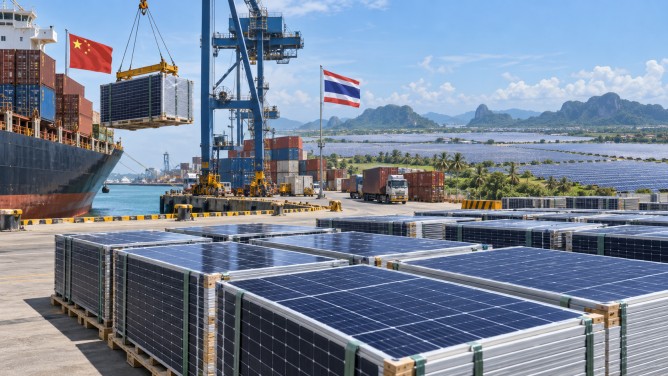
As Thailand intensifies efforts to bolster its renewable energy sector, the nation’s solar panel imports have witnessed a significant surge. In the first seven months of 2026, these imports skyrocketed by 88.7% compared to the previous year, reaching a total value of $426.7 million. This increase aligns with Thailand’s ambitious initiatives to expand solar energy usage among households, indicating a strategic pivot towards sustainable energy solutions.
China emerged as the dominant supplier, accounting for an overwhelming 99.3% of the total solar panel imports, valued at $423.9 million. This marks a remarkable 107.1% increase from the same period in the previous year. Meanwhile, Singapore and Hong Kong contributed marginally to Thailand’s solar panel imports, each responsible for approximately 0.3% of the total import value.
The rise in imports coincides with Thailand’s upcoming household solar installation program, which aims to incentivize solar energy adoption through subsidies of around THB50,000 per household. Initially targeting one million households, the program has the potential to expand to 1.5 million, reflecting the country’s commitment to reducing electricity costs and fostering a domestic clean-energy supply chain.
Further supporting this transition, Thai officials are considering measures to enhance local solar manufacturing capabilities. Collaborative efforts with the Ministry of Labour are underway to train workers in solar panel assembly, installation, and maintenance. Concurrently, discussions with the Board of Investment focus on reducing duties on production inputs that are unavailable domestically, which could further boost domestic solar production.
Through these initiatives, Thailand aims to promote the installation of rooftop and ground-mounted solar systems, thus advancing the nation’s renewable energy agenda. The government envisions these efforts not only as a means to lower household energy expenses but also as a cornerstone in developing a robust clean-energy infrastructure.