
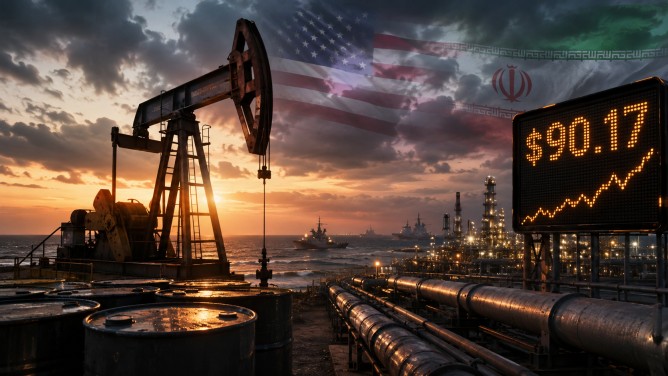
As tensions between the United States and Iran continue to simmer, oil prices have surged following the expiration of a two-month negotiation window without reaching a peace agreement. The lack of progress has heightened fears of prolonged conflict, which could further disrupt global energy supplies. In response, Brent crude prices have climbed past the $90 mark, reaching $91.63 per barrel, the highest level since July 30. This increase follows U.S. President Donald Trump’s demands for Iran to capitulate, coupled with warnings of potential escalation should diplomatic efforts fall short.
The strategic Strait of Hormuz, a vital artery for the global oil trade, has become a focal point of concern. The volume of commercial ships navigating this critical channel has seen a significant decline, fueling anxieties over extended disruptions to the oil market. The situation has been exacerbated by reports of an attack on a cargo vessel traversing the strait, underscoring the heightened risks associated with shipping in the region.
Amidst this volatile backdrop, Iran has signaled a readiness to take a more assertive military posture if negotiations continue to stall. The potential for increased hostilities has led investors to brace themselves for a scenario where disruptions to oil supplies could be more enduring. Any significant closure or reduced traffic through the Strait of Hormuz is likely to exert further upward pressure on crude oil prices.
Analysts are cautioning that the ongoing unrest in the Middle East, particularly the tensions involving Iran, combined with the separate conflict in Ukraine, could deliver additional shocks to global energy markets. This confluence of crises could result in even higher oil and gas prices, magnifying economic challenges worldwide. Stakeholders are closely monitoring the situation, aware that the outcome could have far-reaching implications for energy stability and costs.