
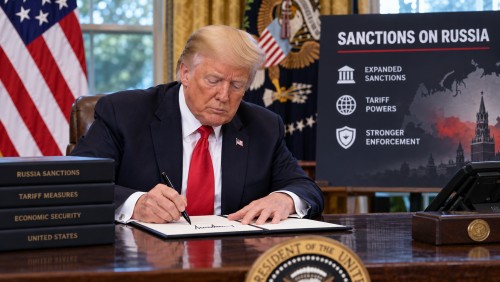
The ongoing geopolitical tensions involving Russia and its energy exports have reached a new phase as the United States strengthens its stance. Recently, President Donald Trump signed into law a bill that expands sanctions against Russia and extends the existing ones on Iran. This legislation not only targets individuals and entities linked to Russia’s military efforts but also aims to curb Russia’s revenue from oil and gas exports.
A significant feature of the new law is the authority it grants the president to impose tariffs of up to 100% on countries that continue to purchase Russian energy. This provision comes amid concerns over nations, such as India and China, which are major consumers of Russian energy resources. The president retains broad discretion over which countries might be targeted and whether certain sanctions may be waived, allowing for flexible diplomatic maneuvers.
The legislative move received bipartisan support in the House of Representatives, reflecting a unified approach to countering Russia’s influence through economic means. By signing the bill into law on September 18, the Trump administration underscores its commitment to strengthening sanctions and tariff measures against Russia, while keeping pressure on Iran through extended sanctions.
This development is set against the backdrop of ongoing international efforts to isolate Russia economically, particularly in light of its actions that have drawn widespread condemnation. The measure aligns with broader strategies to limit Russia’s military and economic capabilities, thereby impacting its global energy market engagement.
As the U.S. administration prepares to implement these expanded powers, affected nations and global markets are closely monitoring the potential impacts. The legislation’s implications for energy trade and international relations could be significant, depending on how the new sanctions and tariffs are enforced.