
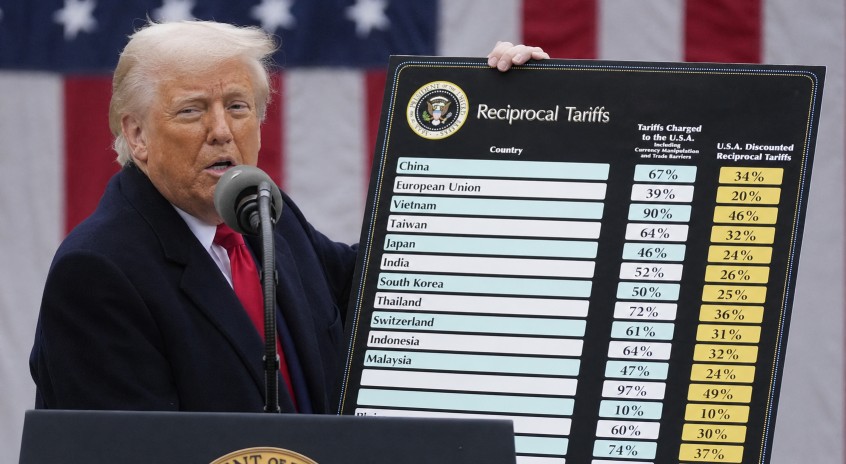
President Donald Trump has taken a significant step in reshaping U.S. trade policy by announcing a fresh series of tariffs on imports from over 80 countries. These tariffs, which range between 10% and 12.5%, are set to replace a global tariff of 10% that expired recently. This move has been introduced amid ongoing legal disputes and is justified by the administration under Section 301 of the U.S. Trade Act of 1974. The Trump administration argues that the tariffs are aimed at addressing issues related to forced labor within global supply chains. According to U.S. Trade Representative Jamieson Greer, the United States expects other nations to tighten their restrictions on imports tied to forced labor practices.
The scope of the newly imposed tariffs extends to a diverse group of countries, including major trading partners such as the United Kingdom, the European Union member states, Canada, Mexico, Australia, India, and China. This decision comes on the heels of a U.S. Supreme Court ruling earlier in the year that cast doubt on the legitimacy of several previous tariffs enacted under emergency powers. In light of the court’s decision, the administration has sought to establish a different legal foundation for its tariff measures.
The response from several U.S. allies has been one of criticism and concern. Both Australia and Brazil have labeled the tariffs as unjustified and are advocating for their removal. The European Union has expressed surprise at the move, requesting further clarification from the United States. Meanwhile, Canada has contended that it should not be included in these measures, pointing to its robust actions against forced-labor imports and advocating for a collaborative, multilateral approach to the issue.
Despite the administration’s stance, trade experts and legal analysts have raised questions regarding the president’s constitutional authority to enforce such extensive tariff measures without the consent of Congress. There is speculation that the new tariffs could face additional legal challenges. Domestically, Trump’s tariff policies continue to be a source of political division. Public opinion surveys suggest that many Americans perceive these tariffs as a factor contributing to rising consumer prices. In contrast, the administration maintains that its trade strategies have bolstered the U.S. economy and shielded domestic industries.
As countries around the world assess the economic ramifications of these tariffs, the latest measures add a layer of unpredictability to the global trade landscape. Governments are now tasked with evaluating their potential impact and formulating appropriate responses. The new tariff policy underscores the complexities and challenges inherent in navigating international trade relations in the current geopolitical climate.