
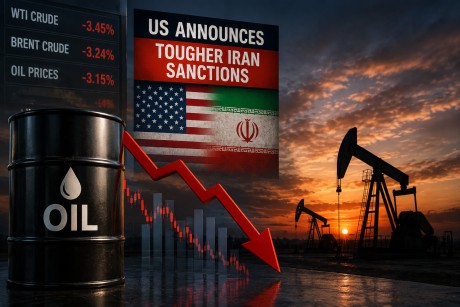
On Tuesday, oil prices experienced a significant drop of more than 3%, hitting their lowest point in a week as investors evaluated the potential repercussions of newly imposed US sanctions on Iran. Brent crude, recognized as the global standard, decreased by 3.1% to settle at $89.31 per barrel. Meanwhile, West Texas Intermediate (WTI) saw a decline of 3.34%, bringing its price down to $82.17. This downturn followed a period of notable gains in the previous week, where Brent had risen by 6.6% and WTI had increased by 5.7%.
The United States has enhanced its sanctions targeting entities and nations engaged in economic transactions with Iran. This move aims to exert additional pressure on Tehran, seeking to undermine its economic stability amid ongoing regional tensions. These developments have kept oil markets on edge, particularly concerning the strategic Strait of Hormuz, an essential pathway for the global energy supply. Iranian authorities have cautioned that they might halt oil shipments through this crucial waterway if the US continues to escalate pressure.
Adding to the volatility, shipping risks have intensified in the region. A tanker was reportedly attacked near Oman’s Musandam peninsula, and persistent assaults in the Red Sea have further contributed to the unpredictability of global energy supplies. Despite these geopolitical threats, the focus among traders shifted toward the implications of the new sanctions, questioning their potential to significantly disrupt Iranian oil exports.
The recent fluctuation in oil prices illustrates the market’s sensitivity to geopolitical events and the delicate balance maintained in the region. While the threat of conflict and disruptions looms large, the immediate impact of sanctions remains a critical factor in determining future price movements. As the situation unfolds, market participants will continue to closely monitor developments to gauge the long-term effects on the global oil supply chain.