
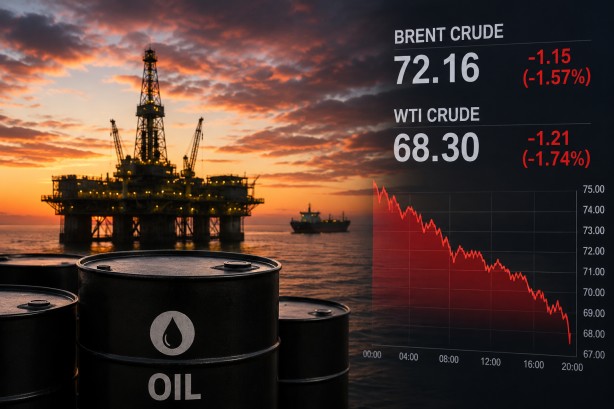
On Thursday, oil prices experienced a slight dip as investors chose to secure profits while weighing the impact of rising tensions between the United States and Iran. Brent crude saw a decrease of 0.52%, reaching $84.51 per barrel, while US West Texas Intermediate crude fell by 0.29% to $79.37 per barrel. Despite these declines, both benchmarks remained near their highest points in a month, having initially continued their upward trend.
The market’s mood has been influenced by concerns about potential supply disruptions stemming from a new series of US assaults on Iranian military targets. In response, Tehran has issued threats to limit energy exports in the region. Central to these developments is the Strait of Hormuz, a vital maritime passage that facilitates a substantial portion of the world’s oil and liquefied natural gas trade. Reports indicate that shipping traffic through this crucial waterway has decreased following the latest hostilities.
Geopolitical tensions persist as a factor supporting elevated oil prices, though investors remain vigilant about the possibility of the conflict causing significant interruptions in energy supplies. Analysts have underscored the situation’s influence on market dynamics, pointing out the potential for further price increases if hostilities intensify.
In addition to the Strait of Hormuz, attention has also turned to the Bab el-Mandeb Strait, another important energy trade route. Concerns are mounting over its security, with apprehensions that regional allies might become embroiled in the escalating conflict. Such developments could further complicate the already fragile geopolitical landscape.
Economic experts caution that should the tensions persist and export disruptions continue, oil prices might climb even higher. Conversely, any de-escalation in the crisis could result in a downward trend in prices as the year progresses. Traders and analysts alike are closely monitoring the evolving situation, aware of its far-reaching implications for global energy markets.