
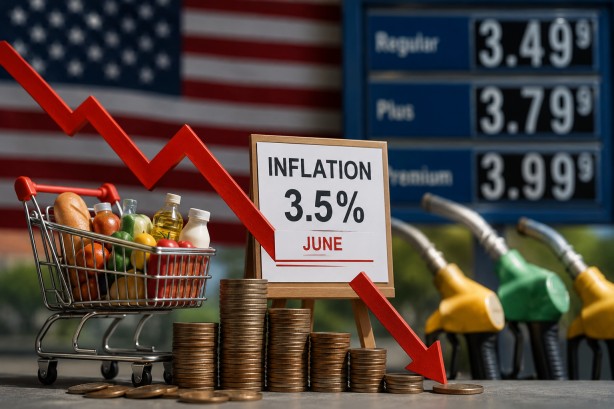
In June, the rate of annual inflation in the United States experienced a slowdown, reaching 3.5%. This decrease was largely attributed to a temporary drop in energy prices, which contributed to a reduction in overall consumer costs. The recent Consumer Price Index (CPI) report indicates that inflation has calmed after previous months of higher rates, with a 0.8% decline in prices compared to May. The most significant factor in this monthly decrease was the reduction in gasoline and fuel prices, which counterbalanced rising costs in other areas like food, housing, and utilities.
Core inflation, a measure that excludes the often unpredictable food and energy prices and is closely watched by the Federal Reserve, fell slightly to 2.6% on a yearly basis. Despite this moderation, there are concerns that the current easing of inflation might be short-lived. This is due to renewed tensions in the Middle East, which have caused global oil prices to rise once more. The increase in crude oil prices has already started to result in higher fuel costs for consumers and has escalated operational expenses for industries such as aviation and transportation.
As the Federal Reserve prepares for its upcoming policy meeting later this month, it will be examining the latest inflation data in conjunction with labor market conditions. Although inflation has seen some moderation, it continues to hover above the central bank’s long-term target of 2%. This persistent gap leaves room for uncertainty regarding the timing of any potential changes in interest rates.
The temporary relief brought by lower energy prices highlights the volatility of economic conditions and the challenges faced by policymakers aiming to stabilize inflation. The interplay between global events, such as the Middle East tensions, and domestic economic indicators underscores the complexity of managing economic policy in an interconnected world.
Moving forward, the Federal Reserve’s assessment of inflation trends and labor market dynamics will be crucial in shaping monetary policy decisions. As they navigate these uncertain waters, the central bank’s objectives will remain focused on achieving a balanced economic environment that supports sustainable growth while keeping inflation in check.