
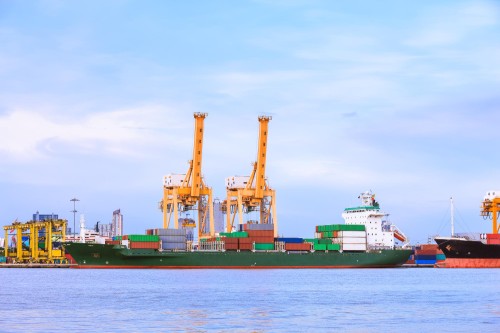
European industries are grappling with a new wave of competition from China, raising concerns about potential job losses and increased dependency on Chinese imports. This situation has drawn parallels to the “China shock” experienced by the United States 25 years ago, when China’s entry into the World Trade Organization led to a surge in imports that displaced local industries and resulted in significant job losses. Jens Eskelund, president of the European Chamber of Commerce in Beijing, highlights that while people commonly associate Chinese imports with finished goods like electric vehicles, the real issue lies in the massive volume of components imported from China. This growing reliance on Chinese components poses a significant challenge for Europe.
As Chinese components become more deeply integrated into the EU’s industrial fabric, the bloc faces difficult decisions. A report suggests that European companies may be required to source critical components from at least three different suppliers to reduce dependency. European commissioners are set to hold urgent discussions on May 29 to explore potential measures. Oliver Richtberg, head of foreign trade at VDMA, commended Brussels’ proactive approach but criticized Berlin’s lack of engagement. He pointed out that state subsidies in China, which are not feasible in Europe, make Chinese products cheaper, compounded by a devalued yuan that leaves procurement officials with limited options.
Richtberg expressed concern over the competitiveness of European products, noting that Chinese suppliers offer products at 95% of the quality for 30-50% less. This situation has resulted in job losses, with Germany’s machinery industry alone losing 22,000 jobs last year. A trade consultant’s analysis, shared on the China trade watch website Soapbox, indicates that the risk extends beyond cheap imports; it threatens the economic viability of EU production, leading to increased dependency on Chinese sources. For instance, the EU imports 52% of amino acid ingredients from China by value, but this figure jumps to 88% by volume. Similarly, 96% of polyhydric alcohols, essential for various products, are sourced from China.
China’s trade surplus with the EU continues to grow, offsetting the impact of the 2024 EU tariffs on Chinese electric vehicles due to exchange rate fluctuations. Andrew Small, director of the Asia program at the European Council on Foreign Relations, suggests that current EU measures are insufficient to address the trade imbalance. China has surpassed the US as Germany’s leading trading partner, and between 2024 and 2025, China’s surplus with Germany doubled, reaching $25 billion. This shift has contributed to the loss of approximately 250,000 industrial jobs in Germany since 2019, particularly in the automotive sector.
To safeguard European industry, the EU has proposed the Industrial Accelerator Act and an update of the Cyber Security Act of 2019, allowing companies to avoid Chinese suppliers on security grounds. However, these measures won’t take effect until 2027, prompting calls for immediate action. Small emphasizes that while tariffs are politically challenging, they fall short of correcting the trade imbalance. Despite potential countermeasures, China’s influence remains strong, with Beijing likely to complicate EU efforts while maintaining its export flow. As Europe navigates these challenges, the debate on how to manage the growing reliance on China continues to intensify.