
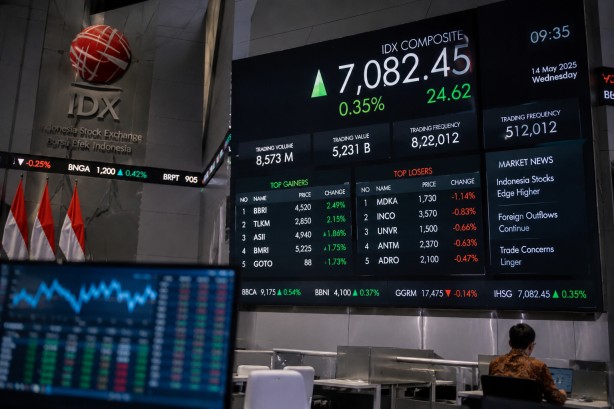
Throughout the week ending July 24, Indonesia’s main stock gauge, the Jakarta Composite Index (JCI), experienced a modest increase of 0.34%. This uptick came amid an escalation in trading activity, even as foreign investors continued to pull out and global economic uncertainties loomed large. The market capitalization within the Indonesia Stock Exchange saw growth, reaching Rp 10,870 trillion, while the average daily trading turnover jumped by 41% to Rp 19.76 trillion. Despite these positive indicators, foreign investors remained on the sidelines as net sellers, with cumulative outflows hitting Rp 79.09 trillion this year, underscoring a cautious stance toward Indonesian investments.
Investor sentiment has been dampened by several factors on the global stage. Rising oil prices, spurred by escalating tensions in the Middle East, have added to market jitters. Furthermore, the introduction of new tariffs by the United States on imports from various trading partners, including a 10% tariff on certain Indonesian goods, has also contributed to the unease. These developments have injected a level of uncertainty that investors are finding difficult to ignore.
Despite these challenges, the Indonesian Finance Ministry has sought to reassure stakeholders about the country’s economic resilience. The ministry acknowledged that the surge in oil prices could potentially put additional pressure on the state budget for 2026. Nevertheless, it emphasized that Indonesia’s overall fiscal health remains stable, suggesting that the nation is well-positioned to navigate these external pressures without major fiscal disruptions.
While the local stock market has shown some resilience through increased trading volumes, the persistent withdrawal of foreign capital reflects broader concerns about the global economic environment and its impact on emerging markets like Indonesia. The tension between positive domestic indicators and unfavorable international developments continues to shape investor behavior, influencing both short-term market movements and long-term investment strategies.